hello, welcome to guangzhou qingqin yu official website!


NEWS
News
Contact Us

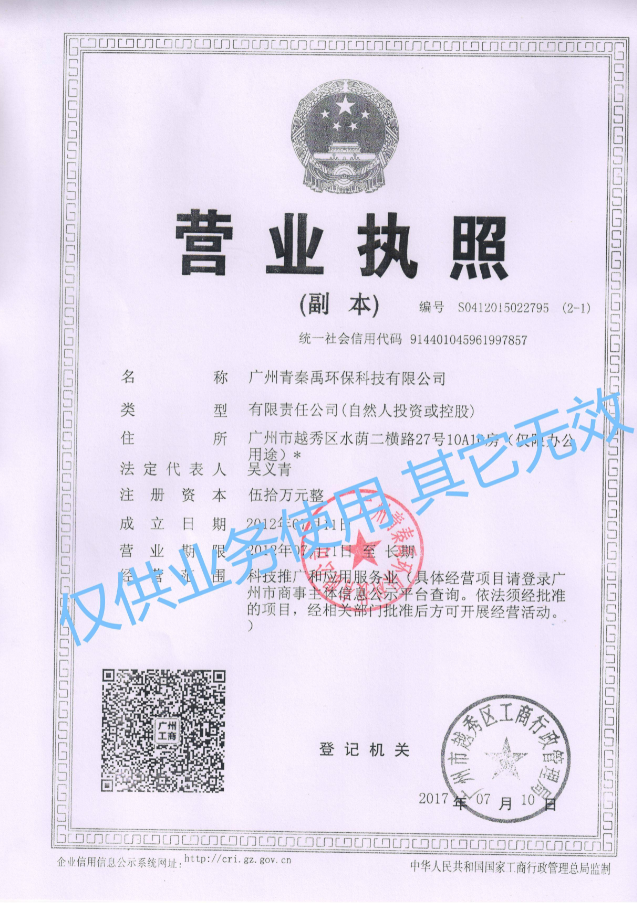
Guangzhou Qing Qin Yu Environmental Protection Technology Co., Ltd.
Sales Center: Room 1010, South Tower, Xindacheng Plaza, 27 Erheng Road, Shuiyin Road, Yuexiu District, Guangzhou
Fax: 020-38989166
Highway construction enters the maintenance era, and the highway maintenance machinery industry boasts a promising future.
Release time:
2023-11-10 16:42

After years of large-scale construction, China's highway network has been largely established and is now poised to enter a peak period of road maintenance and repair. Meanwhile, the ever-increasing traffic demands are placing higher expectations on the efficiency and quality of highway upkeep. These favorable factors will undoubtedly drive the development of highway maintenance machinery. Moreover, the long-standing mindset of "prioritizing reconstruction over maintenance" has left China's highway maintenance mechanization lagging behind; as a result, there remains tremendous room for future growth, with promising market prospects ahead.
Problems with Highway Maintenance Machinery
Although the road maintenance machinery industry has made significant progress, the existing problems remain prominent, especially as the industry enters a new era of road maintenance, with the growing gap between supply and market demand continuing to intensify. Specifically, the road maintenance machinery industry currently faces three major issues:
1. The industry suffers from a weak foundation and insufficient R&D efforts. China's highway construction started relatively late, and research into road maintenance technologies has not received adequate attention. Most of the existing maintenance techniques have been introduced from abroad only in recent years. As a result, the industry as a whole lacks robust original innovation capabilities, and advanced maintenance equipment is still predominantly supplied by foreign manufacturers.
2. This industry has relatively high technological barriers, a lengthy product promotion cycle, and also features diverse product varieties, small-batch production, and customized manufacturing. As a result, some large domestic engineering machinery companies with strong R&D capabilities are currently hesitant to enter the market. This situation has led to the widespread prevalence of smaller-scale enterprises in the domestic sector, with insufficient R&D capacity and investment. Consequently, compared to their international counterparts, these domestic firms still lag behind in terms of product reliability and technological advancement, and certain key technologies and products remain entirely absent from the domestic market.
3. The industry's standard system is still imperfect. The existing standards within the industry are not yet comprehensive or fully developed, and there remains a significant shortage of foundational standards that could provide essential guidance for the industry as a whole—hindered by this gap from achieving rapid and healthy growth.
Finally, the market is still immature and requires a period of cultivation and development. The market for highway maintenance machinery has yet to fully mature, exhibiting issues such as a wide variety of products with inconsistent performance levels. These challenges, to some extent, hinder the growth of high-end offerings and also pose obstacles to building a robust, integrated industrial chain that could leverage economies of scale. Therefore, both market standardization and optimization of the industry structure will inevitably take time to achieve.
Previous Page
Previous Page
Related News

WeChat Public Number

Business Contact
WeChat Public Number
Business Contact
Copyright©2023 Guangzhou Qing Qin Yu Environmental Protection Technology Co., Ltd.