China's New Perspective | How Will Real Estate Develop Over the Next Five Years? The Tone Has Been Set
China News Service, October 18 (By Zhongxin Finance Reporter Zuo Yukun) — The report of the 20th National Congress of the Communist Party of China outlined the direction for real estate development under the overarching framework of "enhancing people's well-being and improving the quality of life." Specifically, it emphasized: "Uphold the principle that housing is for living in, not for speculation, and accelerate the establishment of a housing system featuring multiple players providing supply, multiple channels ensuring affordability, and a balanced approach integrating rental and homeownership options."
What kind of impact will this have on China's housing system and the development of the real estate market?
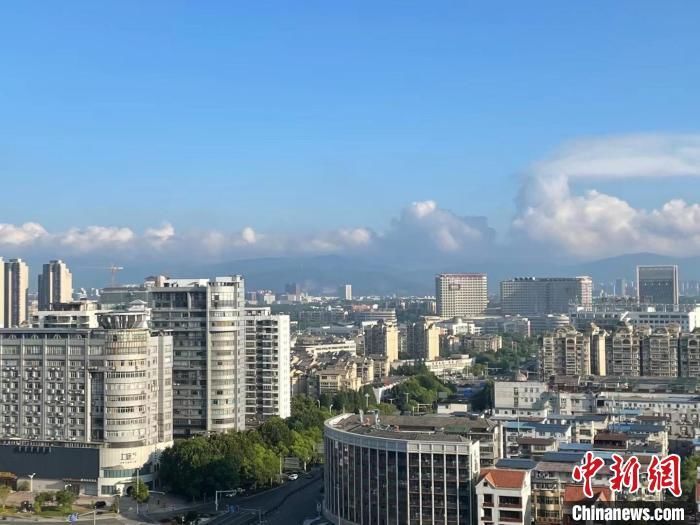
Photo provided: A scenic view of the city. Photo by Yuan Rujing
Reaffirm "Housing is for living, not for speculation."
Since the end of 2016, after the Central Economic Work Conference first emphasized adhering to the principle that "houses are for living in, not for speculation," the concept of "housing is for living, not for trading" was also incorporated into the report of the 19th National Congress of the Communist Party of China in October 2017.
"Over the past few years, despite the ups and downs in the real estate sector, the central government has supported local governments in tailoring policies to optimize housing market regulations. At the same time, 'housing is for living, not for speculation' has remained the unwavering bottom line guiding policy decisions." Chen Wenjing, Director of Market Research at the Index Division of China Index Academy, believes that after years of development, the "housing is for living, not for speculation" philosophy has deeply resonated with the public, becoming a widespread social consensus. As a result, homebuyers are now approaching property purchases with greater rationality, and the residential function of housing continues to strengthen.
Chen Wenjing said that the report from the 20th National Congress once again emphasized, "Houses are for living in, not for speculation," highlighting the unwavering commitment of policy. This also signals that "housing is for living, not for speculation" will remain China's long-term guiding principle for the real estate industry. Moving forward, the focus of real estate development will increasingly shift toward safeguarding people's livelihoods and improving quality of life.
"Looking ahead, reasonable housing demand will continue to be the primary focus of policy support and encouragement. There is still room for both rigid and upgrade-driven housing needs to be unleashed—especially as people’s aspirations for a better quality of life grow increasingly diverse. As a result, demand for upgraded housing is likely to become a key pillar supporting the market," said Chen Wenjing.
Reiterating "Renting and Buying Hand in Hand"
Besides "housing is for living, not for speculation," "promoting both renting and home buying" is also a familiar concept.
The statement in the 20th National Congress report—“accelerating the establishment of a housing system featuring multiple actors providing supply, multiple channels ensuring affordability, and both rental and purchase options”—is consistent with that in the 19th National Congress report.
“The key isn’t where we go, but how we get there,” said Yan Yuejin, Director of Research at the E-House Institute Think Tank Center. He added that this clearly indicates the housing system reform over the next five years will remain firmly aligned with the guiding principles set forth at the 19th National Congress—meaning the overall direction will stay unchanged.
Li Yujia, Chief Researcher at the Housing Policy Research Center of Guangdong Provincial Academy of Urban Planning, also believes that this, on one hand, highlights the need to advance and build the housing system—combining both renting and buying—with a sense of urgency and strategic foresight. On the other hand, establishing this system will inevitably require a gradual process before "renting" and "buying" can truly coexist as equal pillars.
But there are also differences beneath the same wording.
Yan Yuejin pointed out: In the report of the 19th National Congress, the housing system reform was discussed under the overarching framework of "enhancing social security and improving people's livelihoods." However, the report of the 20th National Congress framed it within the broader context of "promoting people's well-being and elevating the quality of life." This clearly demonstrates that, while safeguarding people's livelihoods remains a priority, improving quality of life is equally crucial. In other words, the housing system reform must strike a balance between these two key objectives: ensuring basic living standards and enhancing overall quality of life.
Li Yujia further analyzed that the overarching guiding principles for housing policy in the new era are crystal clear: "housing is for living, not for speculation," and "promoting both rental and homeownership options." The former framework provides the comprehensive vision for housing policy at the national level, serving as the top-level guidance for industry and market management across the country, fostering innovative management models and long-term mechanisms, and driving the establishment of a new housing system and institutional framework. Meanwhile, the latter reflects China's ongoing efforts to deepen housing system reforms, explore new models for real estate development, and chart a course for high-quality growth in the housing sector.

Photo caption: Xi'an's first publicly available affordable rental housing project officially opens for leasing. Photo by Li Yipan
"Renting and Buying Combined" Is Expected to Accelerate
At the end of 2015, the Central Economic Work Conference first mentioned the development of the housing rental market and emphasized that "promoting both renting and buying" would be established as the primary direction for China's housing system reform. Since then, the growth of the housing rental market has noticeably accelerated.
"Currently, China has initially established a favorable momentum for the development of rental housing driven by multiple players. State-owned leasing enterprises have played a leading, regulatory, activating, and stabilizing role in the market, while an increasing number of professional and institutionalized housing rental companies are actively participating in market development," said Zhao Ran, Dean of the ICCRA Housing Rental Industry Research Institute.
“Since the second half of last year, the nation has taken substantial steps in advancing the procurement and construction of affordable rental housing, lowering the threshold for new residents to settle down, allowing rentals to be registered under collective household registration, fostering rental-focused communities, and promoting a combination of renting and home buying.” Li Yujia believes that with collaborative efforts from all relevant stakeholders, the development of a housing system that balances both renting and home ownership will significantly accelerate over the next five years.
"To develop the housing rental market, especially long-term rentals, the key lies in diversifying channels to provide large-scale, professionally managed housing options, thereby expanding the effective supply of rental housing and enhancing the sustainability of this development." Zhao Ran suggested that local areas should integrate factors such as housing supply and demand into their housing development plans, incorporating newly built rental housing into these plans and carefully determining the appropriate scale of rental housing construction.
"More importantly, as China's real estate market gradually shifts from an incremental to a stock-based model, we can actively revitalize existing assets by renovating existing housing stock, paving the way for a sustainable expansion of rental housing supply," said Zhao Ran. (End)