hello, welcome to guangzhou qingqin yu official website!


NEWS
News
Contact Us

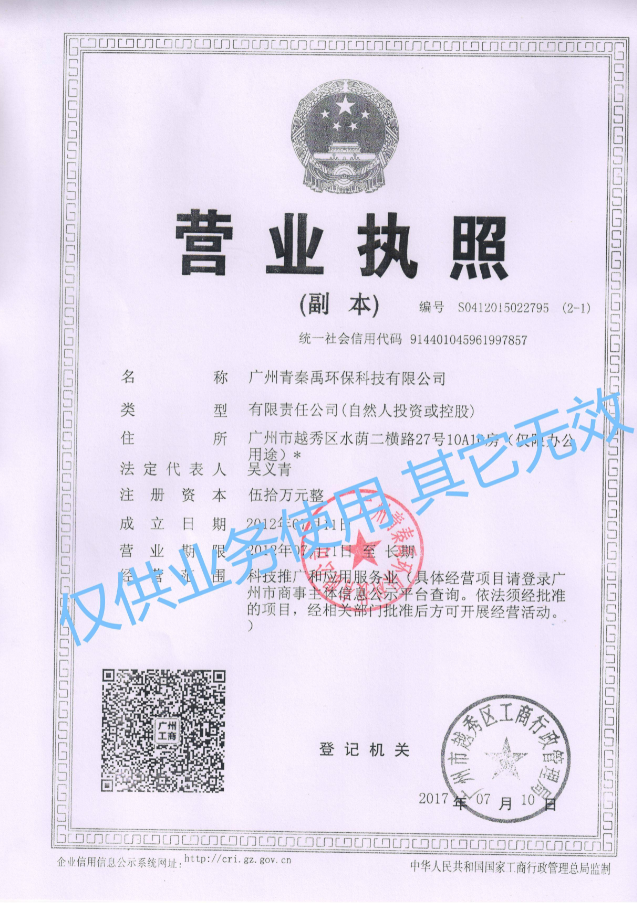
Guangzhou Qing Qin Yu Environmental Protection Technology Co., Ltd.
Sales Center: Room 1010, South Tower, Xindacheng Plaza, 27 Erheng Road, Shuiyin Road, Yuexiu District, Guangzhou
Fax: 020-38989166
The RMB exchange rate broke "7! What are the effects?
Release time:
2023-11-10 16:47
On September 15, Beijing time, in the foreign exchange market, the spot exchange rate of the offshore RMB against the US dollar fell below the integer mark "7". After a lapse of more than two years, the RMB exchange rate against the US dollar once again entered the "7" era.
What will be the future trend? What will be the impact of "breaking 7?
The country is a through train comprehensive official and expert authoritative views, the introduction of "ten questions and ten answers":
1
Is the RMB exchange rate against the US dollar breaking "7" good or not? How should we look at it?
China is a through train: the RMB exchange rate breaks "7", which is really not as serious as everyone thinks. It is just a price and will definitely rise back. This is inevitable.
When the RMB broke "7" in 2019, the central bank said that the RMB exchange rate "broke 7". This "7" is not an age, and it will not come back in the past, nor is it a dam. Once it is broken through the flood, it will pour thousands of miles; "7" is more like the water level of a reservoir, which is higher in the wet season and will fall again in the dry season. It is normal to rise and fall.
We should realize that the RMB exchange rate does not have the basis for long-term depreciation, nor will there be a unilateral market that has been falling or rising.
Even if the "7" is broken this time, in the future, with the stabilization of the domestic economy and the correction of the US dollar index with the use of some tools, it is inevitable to rise back to the "6" range.
In fact, the impact of exchange rate ups and downs is an old topic, and exchange rate depreciation has both advantages and disadvantages. Moderate depreciation is conducive to enhancing the competitiveness of export trade and price advantage, and promoting the recovery of the real economy, but the import cost of importing enterprises will increase.
For example, shoes and boots accessories, textiles and clothing, and leather bags account for a large share of China's export trade. A moderate depreciation of the renminbi may benefit companies in these industries. Conversely, industries that need to import raw materials, goods and services from overseas, as well as companies carrying more dollar bonds, may be negatively affected.
2
On September 6, the central bank lowered the foreign exchange deposit reserve ratio of financial institutions by 2 percentage points. Why does the exchange rate continue to depreciate?
China is a through train: first of all, the central bank announced the news of foreign exchange "interest rate cut" on September 6, not on that day. Starting from September 15, 2022, the central bank will reduce the foreign exchange reserve requirement ratio of financial institutions by 2 percentage points, that is, the foreign exchange reserve requirement ratio will be reduced from the current 8% to 6%.
Therefore, in recent days, the foreign exchange "interest rate cut" is more of a signal effect, is to "shout" to the market, if there is an irrational devaluation, the official will not sit idly.
3
Is the devaluation of the RMB less valuable? Will the devaluation push up the cost of imports, which in turn will lead to higher prices?
The country is a through train: the "worthless" of RMB devaluation is only reflected in the purchase of US dollars with RMB. The cost of imports does increase when imports need to be settled in dollars.
However, please note that if the import settlement is in euros, yen and sterling, the cost is actually decreasing recently, because the RMB is actually appreciating against these currencies.
As for the issue of rising prices, most of China's CPI composition is used for food, and the country can be self-sufficient. The depreciation of the RMB against the US dollar has little impact on our own internal prices.
4
Whether it goes up or down, if I only use RMB for domestic consumption, will the depreciation of RMB exchange rate have no effect on me?
The country is a through train: not necessarily. If the products you consume domestically are imported through US dollars, or their parts are purchased in US dollars, the cost of RMB depreciation may be transferred to the price of the products you want to buy, which will become more expensive.
To give the simplest example, if you go overseas through cross-border e-commerce in China and the final consumption is denominated in US dollars, it will have an impact on you.
5
Why is the dollar worth so much after printing so much? Is the dollar appreciating against the world's major currencies?
The country is a through train: four words, dollar hegemony. Former U.S. Treasury Secretary Connery said, "Our dollars, your troubles."
Generally speaking, if you keep spreading money and "releasing water" crazily, money will definitely be worthless. But the key problem is that the US dollar occupies an absolute monopoly position in various fields such as global trade, payment, finance and foreign exchange reserves.
So, the Fed put "water" is actually the world in digestion, the Fed can raise interest rates and lower interest rates to control the flow of "water" and the price of the dollar, the appreciation of the dollar this year is in the early in order to deal with the epidemic "big water" after the start of the interest rate hike, the dollar back to the local market, pushing up the price of the dollar.
6
Not only is the yuan depreciating, but other currencies are also depreciating against the dollar. Will the increase in import costs make "the whole people pay the bill?
China is a through train: "It's not only the RMB that is depreciating" is indeed the current situation. As mentioned earlier, the euro, yen and pound have fallen more sharply than the RMB, so the RMB is actually appreciating relative to these non-US currencies.
Price advantage and product advantage are important factors that determine business. At this time, it depends on the competitiveness of exports, and it is necessary to conduct specific analysis according to different industries.
As for the increase in the cost of imports, on the one hand, the commodities in our CPI composition can basically be self-sufficient without too much worry; on the other hand, some commodities are involved in the cost increase of exchange rate changes. China has a set of pricing mechanism in the supply of many necessities of life, and the final price after the pricing mechanism comes out is not necessarily paid by the whole people.
7
Will the yuan continue to depreciate, and will funds "run" out?
China is a through train: it is undeniable that in this wave of devaluation of the RMB, there will certainly be some funds going out, but these funds are generally funds with short-term investment purposes or even with a speculative mentality. Now, China's foreign exchange market is operating normally, and cross-border capital flows are also orderly.
At the end of last week, Zheng Wei, deputy director of the safe, said that at present, China's cross-border capital flows are generally stable, and the supply and demand of domestic foreign exchange remain basically balanced. The fundamentals of China's long-term economic improvement have not changed, and it continues to attract direct investment and capital inflows for the purpose of medium-and long-term asset allocation.
In the first half of 2022, China's net direct investment inflow was US $74.9 billion, of which the net inflow of direct investment from China was US $149.6 billion, showing that the Chinese market remains attractive to foreign investment.
8
The United States has been raising interest rates recently. Is now the time to buy US dollar deposits and finance and buy gold?
China is a through train: it is true that the interest rate of US dollar deposits in some banks is already higher than that of RMB, but it should be noted that the high interest rate of US dollar deposits does not necessarily mean that they can enjoy high returns, because the final returns have to take into account changes in exchange rates.
For example, assuming that the current U.S. dollar deposit interest of 3.5 percent a year, if this year, the yuan against the U.S. dollar as long as 4% appreciation, probably from the current level to about 6.6 can be, that is actually a loss, in addition to the exchange of foreign exchange and handling fees, bamboo basket water is empty.
And now the flexibility of the two-way fluctuation of the RMB has increased. The 6.6 level appeared three or four months ago, and it is entirely possible to rise back in the next year. So, don't bet on the exchange rate, because no one can measure it.
As for gold, everyone thinks it is a good safe-haven asset, but it is not a safe-haven asset for the devaluation of the RMB exchange rate. Looking at this round and the previous round of RMB devaluation this year, the price of gold has hardly changed. Investing in gold still depends on the overall international situation and the trend of the US dollar.
9
Why stabilize the exchange rate and lower the foreign exchange reserve? How does this work?
The country is a through train: the essence of the exchange rate of RMB against the US dollar is the price, the price is determined by the relationship between supply and demand, the reduction of the foreign exchange reserve ratio will release the liquidity of the US dollar, and there will be more US dollars in the foreign exchange market, so the US dollar will not be so expensive.
10
What other tools does the central bank have to control the exchange rate when the RMB exchange rate "breaks 7?
The country is a through train: no country's central bank will allow its currency to appreciate or depreciate rapidly.
The People's Bank of China has a lot of monetary policy "toolboxes", and it is also very experienced in dealing with speculation in the foreign exchange market. In the past few years, it has "fought" with the short positions of the RMB exchange rate and returned triumphant.
In addition to the foreign exchange risk reserve ratio that has been introduced, the central bank's tools to prevent rapid exchange rate depreciation include counter-cyclical factors, foreign exchange reserve ratios for financial institutions, and macro-prudential coefficients for cross-border investment and financing.
Disclaimer: The above content is transferred from other media on this website. The relevant information is only for the purpose of transmitting more information. It does not represent the views of this website, nor does it mean that this website agrees with its views or confirms the authenticity of its content. If there is any infringement, please contact (0531) 8519 6822.
Related News

WeChat Public Number

Business Contact
WeChat Public Number
Business Contact
Copyright©2023 Guangzhou Qing Qin Yu Environmental Protection Technology Co., Ltd.