hello, welcome to guangzhou qingqin yu official website!


NEWS
News
Contact Us

Guangzhou Qing Qin Yu Environmental Protection Technology Co., Ltd.
Sales Center: Room 1010, South Tower, Xindacheng Plaza, 27 Erheng Road, Shuiyin Road, Yuexiu District, Guangzhou
Fax: 020-38989166
Expansion! China's largest "cross-city" subway group is coming
Release time:
2023-11-10 16:47
The geographical boundaries of Chinese cities are disappearing.
01
"Cross-provincial" Metro Expansion
The subway is connecting different cities together.
A few days ago, the "Guangzhou Rail Transit Network Planning (2018-2035)" was released. By 2035, Guangzhou will build an urban rail transit system composed of high-speed subways, express subways, and general-speed subways, with a total scale of 53 and 2029 kilometers.
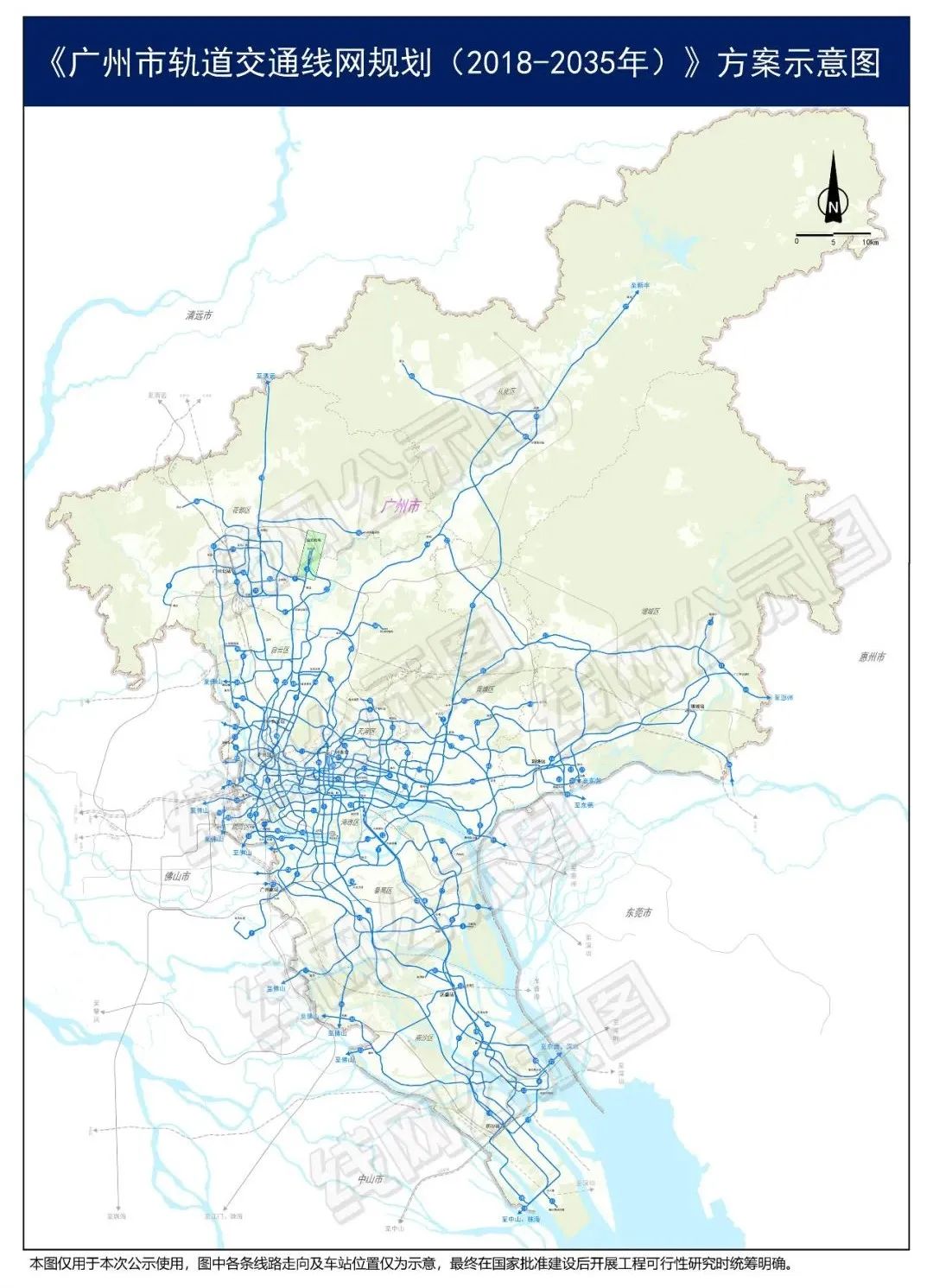
Guangzhou's subway network is not limited to the city, but to the expansion of the metropolitan area and outside.
According to the plan, there will be 18 connecting channels in Guangzhou and Foshan in the future, 6 connecting channels in Guangzhou and Dongguan, and 1 connecting channel in Guangzhou to Shenzhen, Qingyuan, Zhongshan, Huizhou and other regions.
This means that Guangfo is almost connected by subway, and Guangfo will become the largest urban area in China. Guangzhou and Dongguan, Shenzhen, Qingyuan, Zhongshan, Huizhou will also have urban rail transit links.
Coincidentally, Shenzhen is planning to extend the subway line to Dongguan and Huizhou in the metropolitan area.
Recently, according to Shenzhen media, Shenzhen and Dongguan, Huizhou will form a total of 17 cross-city tracks in the future. Among them, there are 13 articles between Shen Guan and 4 articles between Shen Hui.
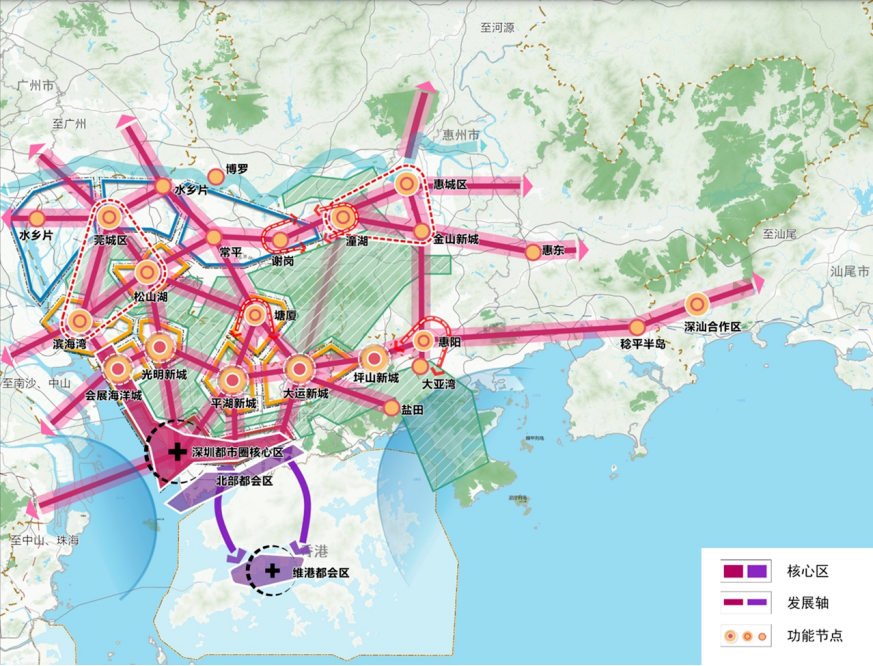
At present, five branches including the east extension of Shenzhen Line 6, the north extension of Shenzhen Line 11, the north extension of Shenzhen Line 22, the east extension of Shenzhen Line 10 and the east extension of Shenzhen Line 14 are being studied and included in the fifth phase of the construction plan.
This indicates that the long-called Shenzhen-Dongguan and Shenzhen-Hui inter-provincial subways are about to move from concept to reality, and Shenzhen's population and industry are expected to continue to transfer to the two places.
At that time, in the Greater Bay Area, there will be not only high-speed rail, EMU, and urban rail connections between major cities, but also a more urban-oriented subway network. The Greater Bay Area will become a city in the sense of transportation.
In addition, the inter-provincial subways in Shanghai and Beijing are also advancing in an orderly manner.
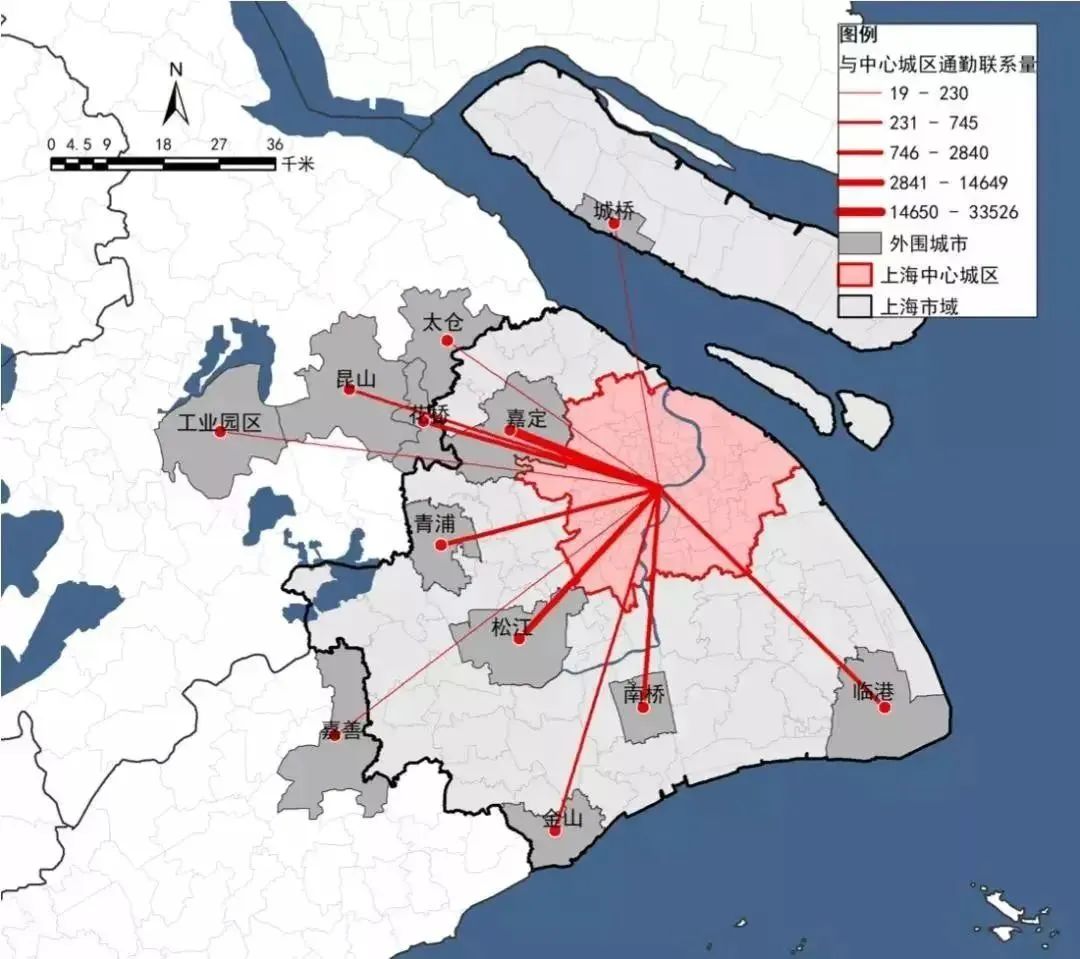
As early as 2013, the country's first inter-provincial subway Shanghai Line 11 was fully completed, and since then there has been a direct channel from Shanghai to Kunshan, Jiangsu. In the future, Shanghai to Jiangsu Taicang, Zhejiang Jiaxing, or will have a city fast rail connection.
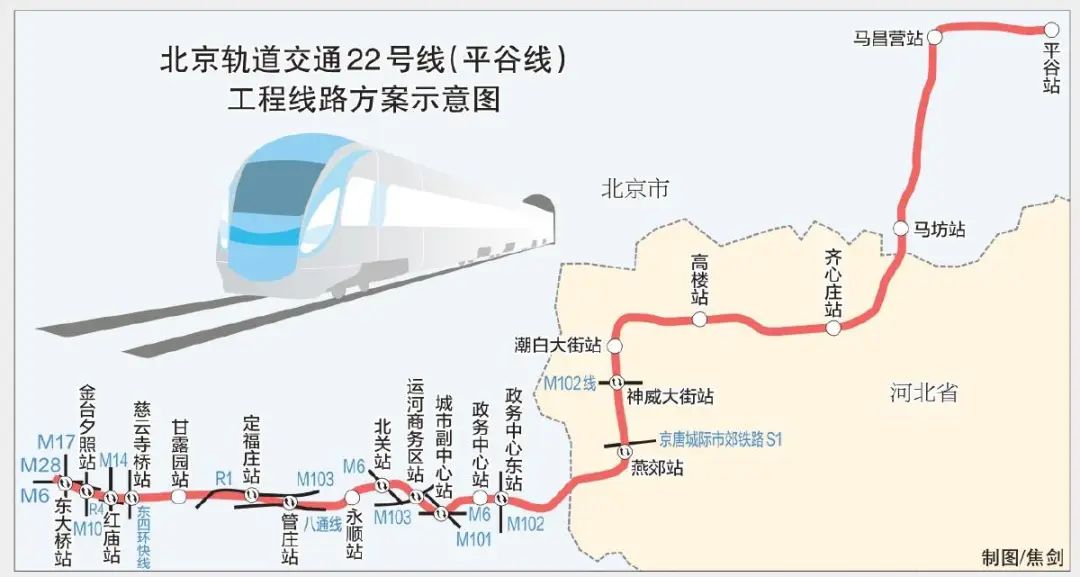
After calling for more than ten years, the Beijing subway finally began to extend to Hebei. At present, the feasibility study report of the Beijing section of Beijing Rail Transit Line 22 (Pinggu Line) has been approved, marking the first time that Beisan County will be connected to the capital subway network.
In addition, there are a number of second-tier cities began to layout within the metropolitan area of the subway network expansion.
At the end of last year, the Gedian section of the third phase of Wuhan Metro Line 11 was opened for operation, and Ezhou entered the "subway era" and became the second city in the province to have a subway after Wuhan.
At present, Nanjing line S6 Ningju intercity operation, Ningma intercity, Ningyang intercity, Ningchou intercity fully started, the future Nanjing to Zhenjiang, Yangzhou and Anhui Maanshan, Chuzhou will have rail transit connections.
……
02
Who is Metro First City?
Subway, why is it so important?
This is the first half of 2022 China's urban rail transit line ranking:
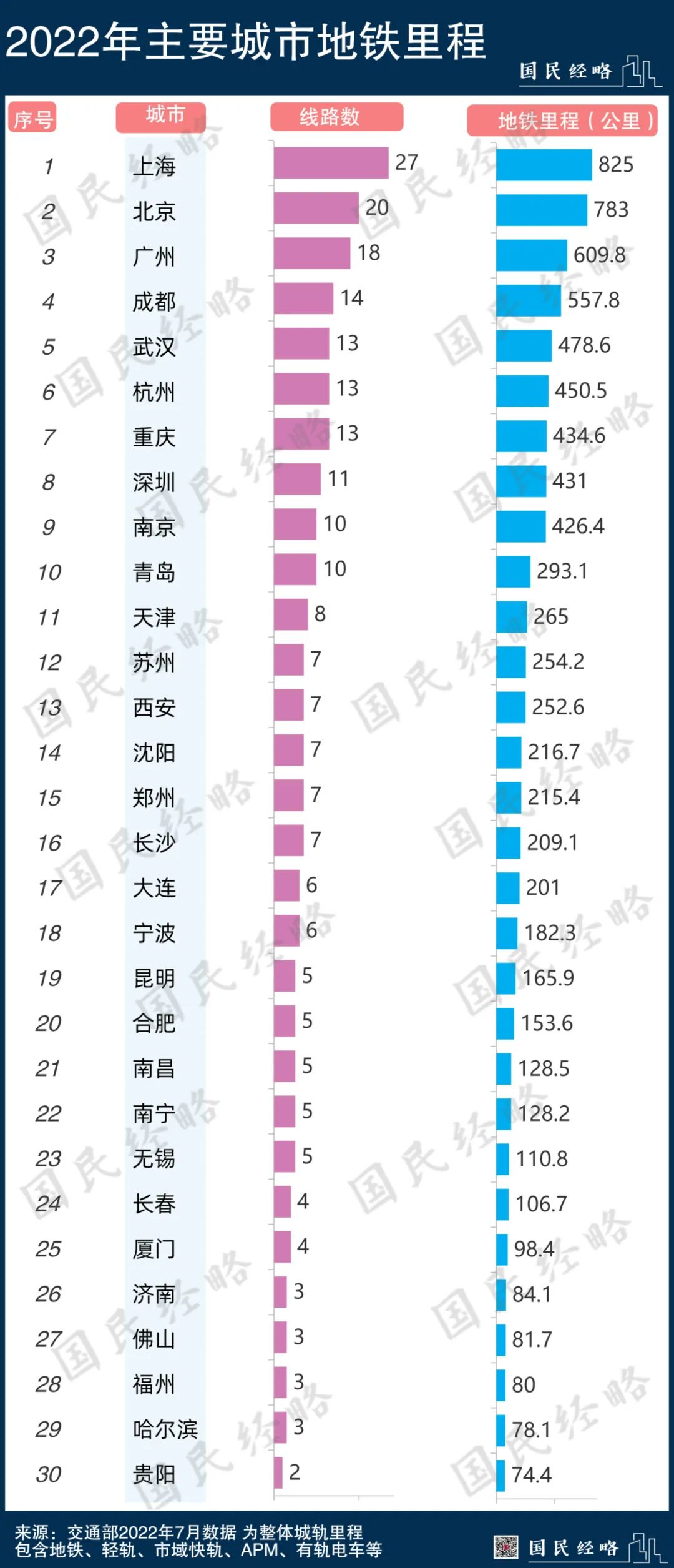
In official documents, the subway is included in the category of urban rail transit.
Urban rail transit is a broad sense of the subway, including subway, light rail, urban express rail, tram, magnetic levitation, APM and so on.
According to the analysis of the book "China's Urban Trends", unlike high-speed rail focusing on inter-provincial transportation and inter-city railway focusing on inter-city transportation, urban rail transit focuses on intra-city and inter-metropolitan areas.
In urban rail transit, subways mostly operate underground, with the highest cost, the strictest approval, and the highest construction threshold, but they cover more stations, the shortest interval, higher passenger flow, stronger pulling effect, and the highest value.
The urban express rail, which connects the central city with the suburbs and metropolitan areas, can be understood as a long-distance subway, but with fewer stations and longer intervals.
Trams are laid on the road, have independent right of way, and the approval is relatively loose. Therefore, they have become an alternative choice for new urban areas and second-and third-tier cities that cannot build subways.
China's urban rail transit, basically to the subway, but more than half of Nanjing, Qingdao nearly 6 Chengdu is the city fast rail.
03
Subway, why is it so important?
When the subway rings, gold is ten thousand taels.
The subway is famous for its large passenger flow, multi-station, high frequency and punctuality, which can not only shorten the access time, but also narrow the psychological distance between different regions.
As long as there is a subway connection, the place tens of kilometers away from the main urban area is no longer a solitary suburb, and the provincial boundary represented by the three northern counties is no longer the embarrassment of being "disliked.
Even if these places cannot be merged with strong central cities, they can also complete the integration in the sense of metropolitan area through subways.
It is worth mentioning that the subway has a strong economic effect.
In the short term, subway construction is a sharp weapon to stimulate the economy, and the fixed asset investment it drives can often become a support for steady growth.
In the medium and long term, the network of subway connections can drive the redistribution of urban population, commerce, and resources among regions, and drive the value of land around the subway to increase by multiple levels.
At the level of the metropolitan area, the existence of the cross-city subway helps to break the geographical boundaries between different cities.
Central cities can use this for soft expansion.
Even if the surrounding cities cannot be merged through administrative means, the influence of transportation, economy, and industry is enough to bring the surrounding cities into their own "disguised.
More importantly, the soft expansion of the central city will also drive the population and industry of the core city and help the common development of the metropolitan area.
At present, in the Pearl River Delta, Yangtze River Delta and the capital metropolitan area, cross-city commuting has become a trend.
Data show that the Pearl River Delta has an average of at least 1.21 million people commuting across cities every day. Among them, with the opening of three inter-city subways, the average number of trips between Guangzhou and Foshan reached 1.74 million, ranking first in the country.
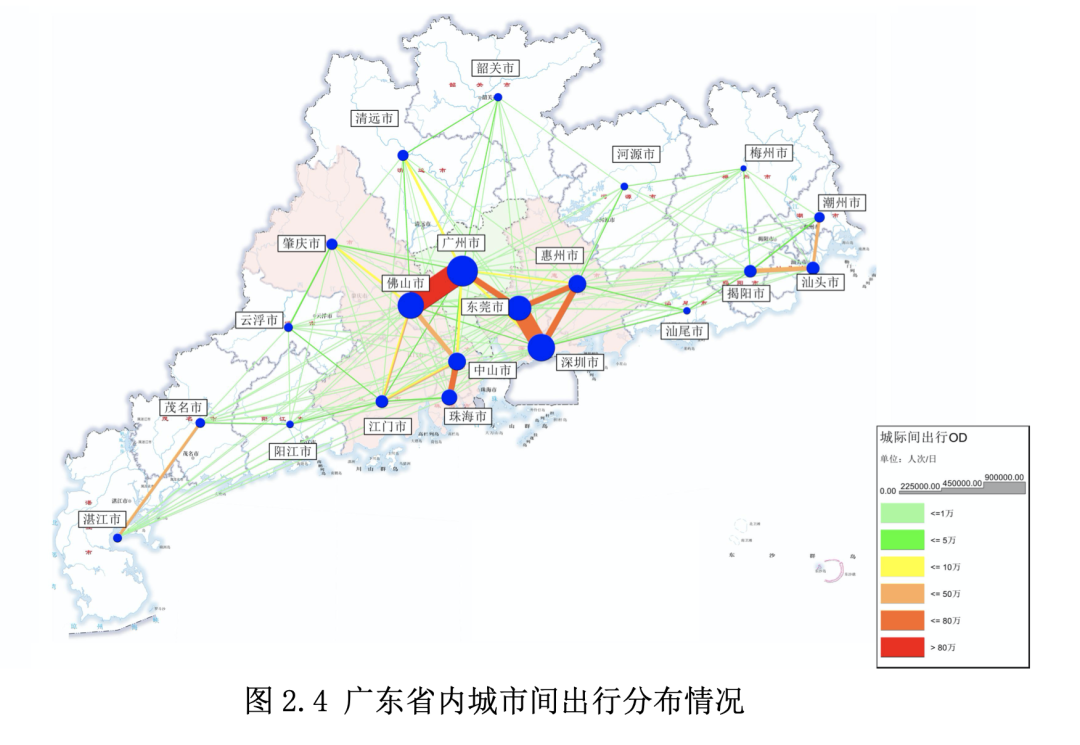
With the gradual formation of the cross-city subway network, this number will double, which can be described as a shot in the arm for the starving third-and fourth-tier property market.
04
Not all cities are eligible to build subways.
The expansion of the cross-city subway allows third-and fourth-tier cities to use the metropolitan area to complete the "curve to save the country" of the subway ".
You know, not every city is qualified to build a subway.
According to the "Opinions on Further Strengthening the Management of Urban Rail Transit Planning and Construction" issued in 2018, the threshold for subway and light rail construction has been comprehensively raised.
The subway requires a GDP of more than 300 billion yuan, an urban population of more than 3 million yuan, and a local general budget revenue of more than 30 billion yuan;
Light rail requires a GDP of more than 150 billion, an urban population of more than 1.5 million, and a local general budget revenue of more than 15 billion.
In the past few years, urban subway projects in Baotou and other cities were suspended because GDP and fiscal revenue did not meet the standards; Huizhou has been seeking to connect with the Shenzhen subway, but it has been stranded many times in the past due to the size of the urban population.
A few days ago, based on the consideration of preventing local debt, the state has further tightened the threshold for subway construction.
At the end of last year, the National Development and Reform Commission and other departments issued a document stating that it is strictly forbidden to build subways and light rails in disguise in the name of new intercity railways and urban (suburban) railways.
At the beginning of this year, according to the China Business News, relevant departments will further refine the urban rail approval conditions, and will not accept the first round of construction plans for unqualified cities and general prefecture-level cities; at the same time, it is stipulated that the passenger flow does not meet the standards after three years of operation., Can not report a new round of construction planning.
This means that even if the GDP, population, fiscal revenue and other rigid indicators meet the standards, the insufficient passenger flow will not be able to build the subway.
This highlights the importance of "cross-city subway" under the metropolitan area, which is equivalent to opening a back door for third-and fourth-tier cities with insufficient economic volume.
The most significant sign of the metropolitan area is the "one-hour traffic circle", which is naturally inseparable from the interconnection of subways, light rails, urban express rails, and intercity railways.
Under the general trend of transportation integration, even if the third-and fourth-tier cities located in the metropolitan area do not meet the requirements, they are also expected to connect the subway.
This is an important opportunity for third-and fourth-tier cities in the metropolitan area era.
Related News

WeChat Public Number

Business Contact
WeChat Public Number
Business Contact
Copyright©2023 Guangzhou Qing Qin Yu Environmental Protection Technology Co., Ltd.