hello, welcome to guangzhou qingqin yu official website!


NEWS
News
Contact Us

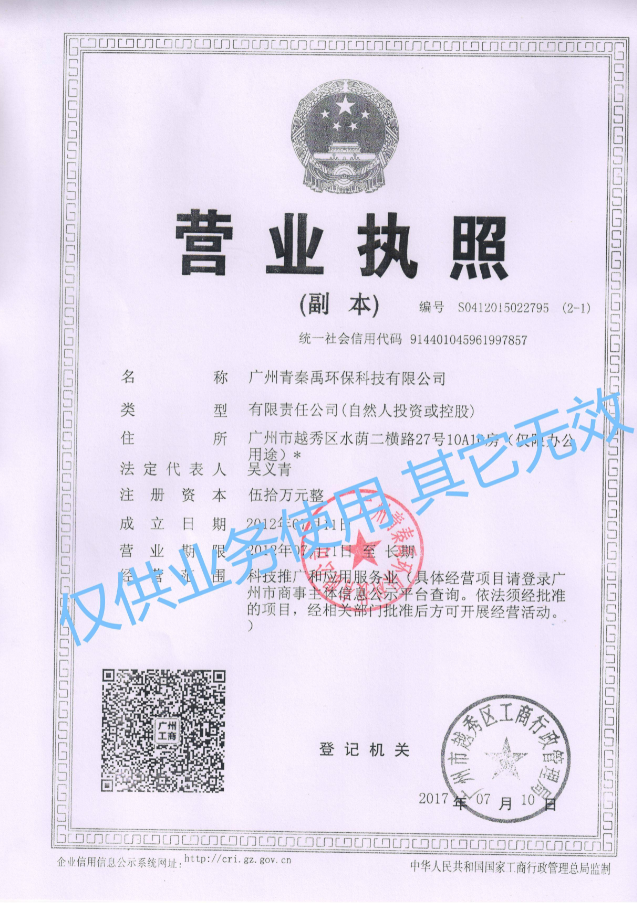
Guangzhou Qing Qin Yu Environmental Protection Technology Co., Ltd.
Sales Center: Room 1010, South Tower, Xindacheng Plaza, 27 Erheng Road, Shuiyin Road, Yuexiu District, Guangzhou
Fax: 020-38989166
The Market Application Prospects of Milling Machines
Release time:
2025-09-25 18:49
Regarding the market prospects for milling machines, we can conduct an in-depth analysis from multiple perspectives. Overall, The market prospects for milling machines remain stable and positive in the medium term, while in the long term, they will be closely tied to the intelligent and green transformation of infrastructure construction.
I. Core Driving Factors (Positive Aspects)
-
The substantial demand for maintaining existing infrastructure:
-
China, along with many countries around the globe, has already moved past the phase of large-scale infrastructure construction and has entered an era where "construction and maintenance are equally prioritized," or even where "maintenance takes precedence." A growing number of highways, airport runways, and municipal roads have reached the end of their service life, necessitating periodic repairs. Among the essential equipment for pavement milling and rehabilitation projects are milling machines. Key equipment This "postnatal" market is its primary and stable source of demand.
-
-
The continuous advancement of urban renewal initiatives:
-
The global urbanization process continues, with urban renewal taking center stage. This includes:
-
Road upgrade and reconstruction: Activities such as "white-to-black" conversions (replacing cement roads with asphalt), road widening projects, and the rebranding of traffic markings all require milling machines to first remove the existing pavement.
-
Underground Pipeline Network Maintenance: When laying or repairing underground pipelines, precise excavation of the road surface is required. Milling machines can efficiently and accurately create trenches with minimal disruption to traffic.
-
"Smart Sponge City" Construction: When renovating pavement with permeable structures, milling technology is also required.
-
-
-
The Popularization of Preventive Maintenance Concepts:
-
Compared to the traditional "repair only when broken" approach, preventive maintenance—such as micro-surfacing and ultra-thin overlays—is both more cost-effective and delivers superior results. These techniques often require meticulous milling of the existing pavement (e.g., roughening or leveling) to enhance the bond between the old and new surfaces, thereby creating significant opportunities for Small, Precision Milling Machine The demand.
-
-
New demands driven by technological upgrades:
-
Intelligence and Automation: Equipped with advanced technologies such as a 3D automatic leveling system, GPS positioning, and remote monitoring, the intelligent milling machine can significantly enhance construction accuracy, efficiency, and safety—while also reducing material waste and labor costs. This, in turn, is driving construction companies to upgrade their aging equipment.
-
Elevated environmental requirements: Increasingly stringent requirements for construction noise and dust control are driving the market demand for eco-friendly milling machines equipped with high-efficiency noise-reduction and dust-removal systems.
-
Multifunctionality: The promotion of cold recycling technology—where milled old materials are recycled and reused on-site—has made milling machines a crucial link in resource circulation, significantly enhancing their value.
-
II. Challenges and Constraints Faced
-
Macroeconomic Cyclical Fluctuations:
-
The milling machine market is highly correlated with fixed asset investment, particularly infrastructure investment. When the economy slows down, government fiscal policies tighten, or the real estate sector experiences a downturn, the growth rate of infrastructure investment may decelerate, directly impacting the volume of new equipment purchases.
-
-
Market competition is becoming increasingly fierce:
-
Market concentration is relatively high, leading to fierce competition among both domestic and international brands, such as Wirtgen, Bomag, Caterpillar, as well as China's XCMG, Sany, and LiuGong, among others. While price wars and service battles may squeeze companies' profit margins, they also serve as a powerful catalyst for driving technological innovation within the industry.
-
-
Initial investment costs are relatively high:
-
Especially large, high-end milling machines are expensive, making the purchase threshold relatively high for small and medium-sized construction companies, which may therefore prefer renting over buying.
-
-
Shortage of professional technical operators:
-
Operating modern milling machines efficiently and precisely requires skilled technicians, but the pace of talent development may not keep up with the speed of equipment upgrades.
-
III. Future Development Trends
-
Electrification and Hybridization:
-
To meet the stringent environmental requirements of urban construction, zero-emission, low-noise electric milling machines—especially compact models—will become a key focus in future R&D and market development. This is particularly true for environmentally sensitive areas such as tunnels and city centers.
-
-
Deep Integration of Intelligentization and Digitalization:
-
"Unmanned" Construction: By leveraging Beidou/GPS high-precision positioning, the Internet of Things, and autonomous driving technologies, coordinated unmanned operations of milling machine fleets will soon become a reality in closed construction areas such as airports and highways.
-
Digital Twins and Big Data: Road surface data collected during milling machine operations—such as smoothness and defect information—can be uploaded to a cloud platform in real time, creating a digital twin of the road. This enables data-driven decision-making for future maintenance activities, paving the way for a transformation from "equipment-centric" solutions to comprehensive "solution-based" approaches.
-
-
Product Line Refinement and Specialization:
-
The market will see more specialized models tailored to specific operating conditions, such as ultra-large milling machines for airport runway maintenance, ultra-small milling machines designed for sidewalks and narrow-space construction, and specialized milling machines dedicated to road maintenance in metal mines.
-
-
Aftermarket services become the core of competition:
-
As the number of devices in circulation continues to grow, profits from device sales alone are shrinking. Consequently, services that span the entire lifecycle of these devices—such as maintenance and repair, parts supply, technical training, equipment leasing, and used-device resale—will become critical growth drivers and a key source of competitive advantage for manufacturers.
-
Summary
Overall, the market outlook for milling machines is Optimistic and full of structural opportunities That's right. The driving force behind its growth has shifted from relying on "new construction" in the past to a more sustainable and stable approach of "maintenance and renovation." Looking ahead, the key areas of growth will primarily lie in:
-
Market Dimension: Penetrating into more specialized sectors such as municipal projects, airports, and mines, beyond the realm of large-scale highways.
-
Technical Dimension: Towards Green (electrification), Smart (digitalization), Precise (refined construction) Direction upgrade.
-
Business Model Dimension: From selling single devices to providing Comprehensive solutions and high-value aftermarket services Transformation.
Therefore, for equipment manufacturers and construction companies, keeping pace with technological trends, deeply cultivating niche markets, and enhancing service capabilities will be the key to seizing future market opportunities in the milling machine industry. 


Related News

WeChat Public Number

Business Contact
WeChat Public Number
Business Contact
Copyright©2023 Guangzhou Qing Qin Yu Environmental Protection Technology Co., Ltd.